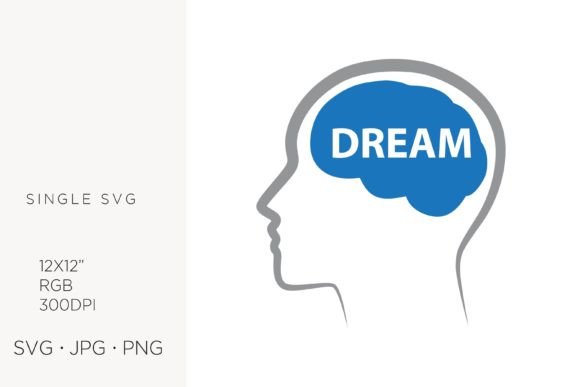
Unlocking the Potential of Word Dream Inside Human Brain, Vector for Modern Design Projects
The intersection of psychology and visual art has never been more relevant than it is today. As creators, we are constantly searching for imagery that captures the complexity of thought, creativity, and the subconscious. This is where the Word Dream Inside Human Brain, Vector graphic becomes an invaluable asset. It is not merely a clipart image; it is a conceptual tool that allows designers to visualize abstract ideas like innovation, mental health awareness, education, and cognitive science. However, possessing a high-quality digital file is only half the battle. The true value lies in how effectively you integrate this element into your broader design strategy without compromising quality or brand integrity.
Many beginners and even seasoned professionals make critical errors when incorporating complex vector artwork into their projects. These mistakes often stem from a misunderstanding of file formats, resolution requirements, and licensing nuances. By understanding these pitfalls, you can ensure that your final output—whether it is a logo, a wall art piece, or a web banner—maintains its professional polish and visual impact.
Understanding the Versatility of the Asset
Before diving into technical details, it is essential to recognize why this specific graphic is so sought after. The concept of a brain filled with words or dream-like elements serves as a powerful metaphor. For educators, it represents learning and knowledge retention. For marketers, it symbolizes brainstorming and idea generation. For healthcare professionals, it can illustrate mental wellness or therapy outcomes.
The provided package includes an SVG file, a high-resolution JPG, and a PNG with a transparent background, all at 300 DPI in the RGB color palette. This variety is designed to cover almost every use case, from digital screens to physical prints. Yet, many users overlook the specific strengths of each format, leading to subpar results. For instance, using the JPG for a logo overlay on a colored background will result in an unsightly white box around the image, whereas the PNG or SVG would blend seamlessly.
Common Mistakes and How to Avoid Them
One of the most frequent errors involves ignoring the native artboard size. This digital graphic is created on a 12x12 inch artboard. While vectors are scalable, starting with the correct proportions ensures that the balance between the brain outline and the internal word elements remains intact. Scaling disproportionately can distort the typography inside the brain, making it unreadable and defeating the purpose of the "word dream" concept.
Another significant oversight is neglecting color profile compatibility. The files are provided in RGB, which is ideal for screens, web design, and digital invitations. However, if you intend to print this on stationery, handmade cards, or large wall art, you must convert the colors to CMYK. Failing to do so can result in printed colors appearing dull or shifted compared to what you see on your monitor. Always check your printer’s requirements before sending files to production.
Additionally, many creators forget to optimize the SVG code for web use. While the included SVG file is clean, embedding it directly into a website without minification can slow down page load times. For web designers, it is advisable to review the SVG code or use optimization tools to ensure efficient performance without losing visual fidelity.
Maximizing Quality Across Different Mediums
When using this artwork for physical products like party decor or printed paper items, resolution is key. Although vectors are infinitely scalable, the accompanying JPG and PNG files are raster images fixed at 300 DPI. This resolution is perfect for high-quality prints up to the original 12x12 inch size. If you need to enlarge the image significantly for a billboard or large banner, rely solely on the SVG file. Rasterizing a vector at a small size and then enlarging it will lead to pixelation, which looks unprofessional and cheapens the perceived value of your brand.
For those creating handmade craft items or stationery, consider the transparency feature of the PNG file. This allows you to layer the brain graphic over textured papers or patterned backgrounds without harsh edges. It creates a sophisticated, integrated look that suggests custom design rather than simple copy-paste assembly. This attention to detail can significantly enhance the perceived value of handmade cards and announcements.
Strategic Application for Brands and Entrepreneurs
Entrepreneurs and small business owners often struggle with consistent branding. Using a versatile graphic like the Word Dream Inside Human Brain, Vector requires a strategic approach. Do not just drop it into every marketing material. Instead, use it to reinforce specific messages. For example, use it in blog headers related to innovation or team-building workshops. Use it on invitation cards for creative conferences or educational seminars.
A common mistake is overcrowding the design. Since the graphic already contains intricate word elements inside the brain shape, adding too much surrounding text or clutter can make the composition chaotic. Embrace white space. Let the graphic breathe. This minimalist approach not only highlights the artwork but also improves readability and user engagement, whether on a business card or a social media post.
Pre-Purchase and Pre-Use Checklist
Before you begin your next project, take a moment to evaluate your needs against the assets provided. Ask yourself the following questions:
- What is the final output? If it is digital, stick to RGB and SVG/PNG. If it is print, prepare for CMYK conversion and use the high-res JPG or SVG.
- Do I need transparency? If placing over non-white backgrounds, always choose the PNG or SVG. Avoid the JPG for layered designs.
- Is the scale appropriate? Ensure that the text within the brain remains legible at the intended display size. Test print a small sample if possible.
- Have I checked the license? Understand the usage rights. While this asset is versatile for logos, wall art, and web design, ensure your specific commercial application aligns with the provider's terms.
By approaching the Word Dream Inside Human Brain, Vector with a clear plan and technical awareness, you transform a simple digital download into a powerful communication tool. Whether you are designing a logo for a psychology practice, creating engaging content for a marketing campaign, or crafting unique party decor, the right application of this graphic can elevate your work from ordinary to exceptional. Avoid the common pitfalls of format mismatch and poor scaling, and you will find that this asset offers endless possibilities for creative expression.
Remember, good design is not just about having the right images; it is about using them correctly. Take the time to understand the technical specifications, respect the artistic balance of the composition, and align the visual metaphor with your message. In doing so, you will create materials that resonate with your audience and stand out in a crowded marketplace.