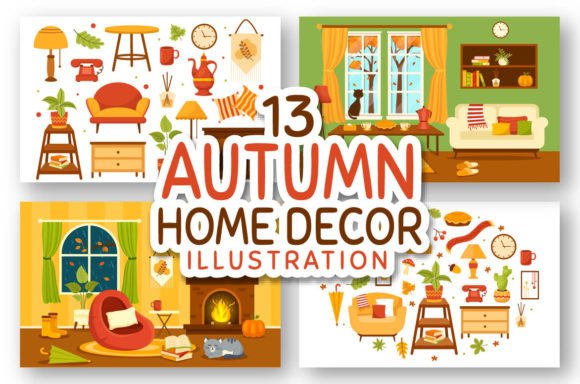
13 Autumn Home Decor Illustration: A Practical Guide to Choosing the Right Vector Assets
As the leaves begin to turn and the air grows crisp, the demand for seasonal visual content spikes across digital platforms. Whether you are designing a landing page for an e-commerce store, creating social media graphics, or updating your blog’s header, having high-quality autumn-themed assets is essential. This is where a comprehensive collection like the 13 Autumn Home Decor Illustration set becomes invaluable. These resources offer more than just pretty pictures; they provide flexible, professional-grade tools that can save designers hours of work. However, simply downloading any vector pack is not enough. Many creators overlook critical technical details that can lead to frustration later in the design process.
Understanding what makes a vector illustration truly useful requires looking beyond the preview image. The difference between a amateurish banner and a polished marketing asset often lies in how well the underlying files are structured. When evaluating a package that includes living room interior furniture background elements in flat cartoon hand-drawn templates, you must consider editability, file compatibility, and layer organization. Ignoring these factors can result in wasted time and subpar final products.
The Trap of Non-Editable Flat Images
One of the most common mistakes beginners make is assuming that all "vector" downloads are created equal. You might find a beautiful autumn scene, but if it is delivered as a flattened JPEG or a poorly organized PNG, your creative freedom is severely limited. A true vector asset should allow you to modify individual components. For instance, if you love the composition of a cozy living room but dislike the color of the sofa, you should be able to change that specific element without affecting the rest of the illustration.
When you rely on static images, you lose the ability to adapt the design to different brand guidelines. This lack of flexibility forces you to start from scratch or use clumsy workarounds that degrade image quality. To avoid this, always verify that the package includes fully editable source files. Look for formats like Ai (Adobe Illustrator) and Eps 10. These formats ensure that every object, from the throw pillows to the window frames, remains distinct and modifiable. The inclusion of SVG files is also a major plus for web developers who need scalable graphics that load quickly on websites.
Overlooking Layer Organization in PSD Files
While vectors are ideal for scalability, many projects still require raster editing in Photoshop. A frequent oversight is downloading a PSD file that has hundreds of unnamed, merged layers. This disorganization turns a simple color adjustment into a tedious hunt through the layers panel. If you are working against a tight deadline, such as preparing a Black Friday brochure or a Halloween landing page, this inefficiency can be costly.
The right approach is to choose assets that emphasize layered structure. A well-prepared Photoshop file will have groups labeled clearly, such as "Background," "Furniture," "Decorations," and "Text Placeholders." This organization allows you to toggle visibility, adjust opacity, or apply filters to specific sections without disrupting the entire composition. Before committing to a download, check the product description for mentions of "layered" or "organized" files. If the seller provides a help file or detailed preview of the layer structure, take advantage of it. This small step can significantly enhance your workflow efficiency.
Misjudging Style Consistency and Versatility
Another subtle error is failing to assess whether the illustration style matches your intended audience. The 13 Autumn Home Decor Illustration set features a flat cartoon hand-drawn aesthetic. This style is warm, inviting, and modern, making it perfect for lifestyle blogs, family-oriented brands, and cozy product promotions. However, if you are designing for a luxury real estate firm or a high-end architectural portfolio, this playful style might feel too casual.
It is crucial to align the visual tone with your brand identity. Do not force a whimsical vector into a serious corporate context just because it is trendy. Instead, evaluate the versatility of the elements. Can the living room interior be stripped down to its basic shapes for a minimalist look? Can the colors be muted for a more sophisticated palette? High-quality vector sets allow for this level of adaptation. By testing a few color variations early on, you can determine if the asset can serve multiple purposes across your marketing channels, from web banners to printed brochures.
Ignoring File Format Compatibility
Many freelancers and small business owners assume they can open any file format with their current software. This is a dangerous assumption. For example, older versions of Adobe Illustrator may struggle with newer AI files, and non-Adobe users might not know how to handle EPS files properly. If you do not have access to professional design software, you might find yourself unable to edit the core elements of the illustration.
To prevent this, check the included formats carefully. A robust package should include PNG transparent background files for immediate use in drag-and-drop editors like Canva or PowerPoint. Additionally, SVG support is vital for modern web design, ensuring crisp rendering on all screen sizes. If you are unsure about your software’s capabilities, look for packages that include a help file or guide. These resources often explain how to import and edit files in various programs, bridging the gap between professional tools and beginner-friendly workflows.
Neglecting Resolution and Scalability Needs
While vectors are infinitely scalable, the accompanying raster files (like JPEG previews or PNGs) are not. A common mistake is using a low-resolution PNG for large-format printing, such as a poster or trade show banner. This results in pixelated, unprofessional outputs that damage brand credibility. Always use the vector source files for print materials to ensure sharp edges and clean lines.
For digital use, ensure that the transparent PNGs provided are high enough resolution for your needs. If you are creating a hero image for a website, a small thumbnail-sized PNG will look blurry when stretched. Verify the dimensions of the included raster files. If they are too small, rely on the vector formats to export custom-sized assets tailored to your specific platform requirements. This proactive check ensures that your autumn decor illustrations look crisp whether viewed on a mobile phone or a 4K monitor.
Making the Right Choice for Your Project
Selecting the right design assets is about balancing aesthetics with technical practicality. The 13 Autumn Home Decor Illustration collection offers a strong foundation for seasonal content, but its value depends on how well you utilize its features. By prioritizing editable vector formats, organized layers, and compatible file types, you avoid the pitfalls that plague many DIY designers. Remember to test the files early, respect the style’s limitations, and always match the asset to your brand’s voice. With these considerations in mind, you can create engaging, professional-quality visuals that capture the warmth of the season without the stress of technical hurdles.